
Cry Me a River Complete 6-Page Solo Jazz Piano Transcription (Paul Tobey)
$29.95
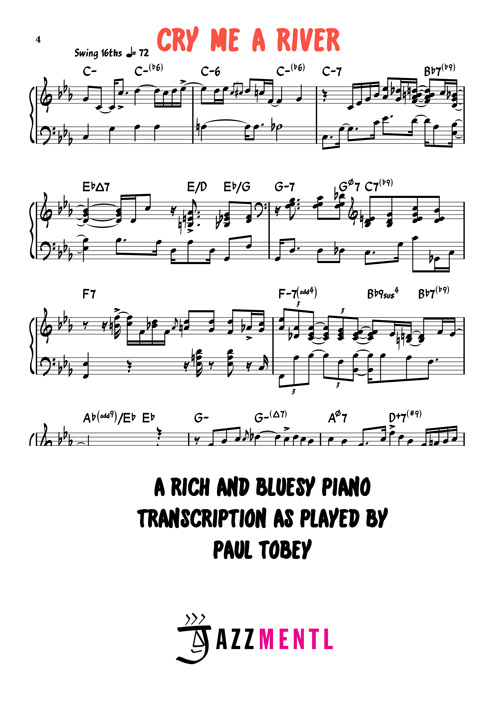
Captured live during a Jazzmentl Saturday morning livestream, this is a complete 6-page solo jazz piano transcription of the classic torch song “Cry Me a River.” Performed by Paul Tobey with smoky rubato, modern reharmonization, and a blues-soaked second chorus, this chart has been meticulously notated by our in-house genius, Przemyslaw Jaworucki. Highlights include: Colorful minor-key voicings (C–(♭6), C–6, F–11) and altered dominant colors, Sophisticated substitutions with ♯11 chords, sus4s, half-diminished approaches, and tritone movement, Rich two-handed block chords and cluster voicings, A shift from rubato ballad playing into a swinging-16ths solo chorus, Blues phrasing, grace notes, triplets, and a soaring rubato coda. Perfect for jazz pianists who want to turn a familiar standard into a personal, emotionally charged solo-piano statement.
Study the rubato opening, the harmonic substitutions, and the blues language that give this performance its bite. Includes the full transcription (6 pages) + direct link to the original livestream video. A must-have addition to any serious jazz piano library.
Transcribed from a live Jazzmentl Saturday morning masterclass comes this complete 6-page solo jazz piano rendition of “Cry Me a River,” Arthur Hamilton’s immortal torch song. Paul Tobey treats it as both a ballad and a blues: a singing rubato chorus that lets every phrase breathe, then a swinging-16ths chorus that puts grit and motion under the same melody. The result is intimate, orchestral, and unmistakably personal.
Our in-house transcription genius, Przemyslaw Jaworucki (the same wizard behind “Darn That Dream” and “After You’ve Gone”), has captured every voicing, inner voice, and ornamental detail with musical sensitivity and pinpoint accuracy.
This chart is packed with highlights:
- A richly reharmonized C-minor landscape — C–(♭6), C–6, F–11, ♭9sus4s, ♯11 dominants, half-diminished approaches, and unexpected bass motion that keeps the harmony modern without losing the song’s ache
- Full two-handed block chords, lush cluster voicings, and voice-led inner lines
- A clear two-feel architecture: rubato at ♩ = 60 for the opening statement, then swing 16ths at ♩ = 72 for the solo chorus
- Blues language throughout — bent-sounding grace notes, minor-blues shapes over major-sounding changes, and lines that sound spoken rather than written
Triplets, syncopated left-hand figures, 8va passages, and a closing rubato flourish that climbs into the high register
It’s more than notes on a page — it’s a working lesson in how to “blues up” a standard. You’ll see how Paul uses color tones to make a familiar progression feel new, how he keeps both hands sounding like one instrument in the rubato sections, and how he turns the second chorus into a real improvisation without abandoning the tune.
This transcription is pure gold for any serious jazz pianist who wants stronger ballad playing and a more personal blues vocabulary. Study the freedom of the opening rubato, absorb the substitutions, lock in those full-handed voicings, then take the swinging-16ths chorus apart phrase by phrase.
Whether you’re preparing for a gig, expanding your solo piano book, or looking for a chart that actually shows how a torch song can still sting, this is the real deal. A must-have addition to any collection that treasures expressive, personal readings of the Great American Songbook. Pair it with the original livestream video for the ultimate learning experience — play a phrase, listen back, and let the feeling sink into your hands.Dig in, stay hip, and let “Cry Me a River” become the next standard that sounds like you.
To watch the full performance of this transcription, click the video below…
Related products
-
 Intermediate
Jesu Joy of Man’s Desiring – Sheet Music PDF, MIDI, Backing Track, & MP3
$14.95 Add to cart -
-
 Intermediate
O Christmas Tree Solo Transcription, Backing Track, MIDI File & More!
$19.95 Add to cart -